Showing posts with label Catholic-Hierarchy. Show all posts

26 July 2026

Living Bishops as Consecrators

Today there are 5,653 living Bishops in my databases. (There are some living non-Bishops as well, such as Abbots, Curial Officials, those named Bishop but not yet consecrated, etc.)

Of the living Bishops, how many have served as a Principal Consecrator or as a Principal Co-Consecrator?

As Principal Consecrator: 1,283 (22.7%) of living Bishops have served in that role. The top 3 are:

As a Principal Co-Consecrator: 3,050 (54.0%) have served in that role. The top 2 are: As either of the above: 3,291 (58.2%) have served in one of those roles. The top 5 are:
  • Giovanni Battista Cardinal Re, 169
  • Tarcisio Pietro Evasio Cardinal Bertone, S.D.B., 81
  • Archbishop Salvatore Pennacchio, 74
  • Paolo Cardinal Romeo, 64
  • Pietro Cardinal Parolin, 63

08 May 2026

Religious Orders in Recent Times (top dozen, charts, 2026)

I've updated a few charts that look at the number of priests and members of religious orders over the last several decades. To avoid it looking like spaghetti, I only used the top dozen orders based on number of priests*. I also split the top 4 from the other 8 - there is very little overlap between the two sets and it makes the charts much clearer.

The charts are posted here. (.pdf format)

The Jesuits were the first order (of the top dozen) to have lost more than half of their members from their recent high point (from 36,038 in 1966 to 17,908 in 2011). They are currently at 13,768 members, down 62% from the all time high.

One might note that there is no significant change in the trends (positive or negative) since Pope Francis (a Jesuit) became Pope. In fairness, it normally takes several years for any event in a religious order (or diocese) to have an impact on the vocation numbers. In the case of the Jesuits, they also have a much longer formation process than most, meaning it could take even longer.


Likewise, it will be years before any effects from the election of Pope Leo XIV (an Augustinian) will be seen in the statistics.

Two more orders reached that milestone in 2016: Franciscans (now down 55%) and Oblates of Mary Immaculate (now down 54%).

Two more orders reached that point in 2022: Redemptorists (down 51%) and Vincentians/Lazarists (down 52%).

In terms of priests, only four orders have reached that point, the Benedictines which are down 57% from their recent high point (from 7,058 in the early 1970s to 3,420 in 2019) and the Oblates of Mary Immaculate which reached it in 2021 (from 5,441 in 1967 to 2,643) and down 53% now). 

In 2022 the Jesuits were down 50% (from 21,025 in 1969 to 10,432), now down 53%. In 2024 the Franciscans were added to the list, down 51% (from 16,528 in 1967 to 8,140.

In the top dozen, only one order, Divine Word Missionaries, has hit its high mark in terms of members in recent years (6,131 in 2009).

In terms of priests, two orders hit their highest mark in 2016: Divine Word Missionaries with 4,231 and Discalced Carmelites with 2,937.

The Salesians had the best year of the top 12, increasing both their number of priests and number of members overall.

Overall, adding all of the top 12 together, the all time high was in 1966 with 160,926 total members. In 2025, that had dropped 48% to 84,356. In terms of priests, the high was in 1971 with 95,411 total priests. In 2025, that had dropped 38% to 59,276.

If current trends continue, the Jesuits will lose the title of the largest religious order to the Salesians of Saint John Bosco soon - the difference now is less than 100. In addition the Jesuits fell under 10,000 priests in 2025.

In terms of the number of living Bishops from each order, it is once again mostly the same orders.
Salesians of Saint John Bosco is the top with 111. Next is Franciscans with 110.
Only three more have more than 50: Capuchins with 74; Jesuits with 65; and Redemptorists with 59.

---

(* Out of curiosity I checked the top dozen orders based on number of members - it was the same dozen, but in a slightly different order.)

Note that only Male Religious Orders were included because that happens to be the data I have readily available. As time permits, I hope to do similar charts for Female Religious Orders. A few have already been added to the main website.
Women Religious Orders


19 May 2025

Busy Month on the Main Site

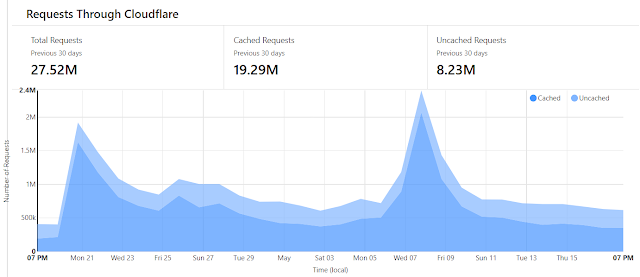
 The main website (Catholic-Hierarchy.org) has had a very busy month, for obvious reasons.


Thanks to Cloudflare and Drummer Boy Hosting, the site managed to make it through without crashing. (In the previous 2 Conclaves - 2005 and 2013 - the site had crashed from the sheer volume of traffic.)


Hopefully there will not be another Conclave for many years!


14 May 2025

Why does Timothy Cardinal Radcliffe not have an episcopal lineage?

On the main site, why does Timothy Peter Joseph Cardinal Radcliffe not have an Episcopal Lineage on his page?

Cardinal Radcliffe was a Cardinal Elector in the Conclave of 2025, but he is not a bishop.
When he was created a Cardinal in 2024, he requested and was granted a dispensation from being consecrated a bishop by Pope Francis.


Thus no episcopal lineage.

04 May 2025

Male Religious Orders in Recent Times (top dozen, charts, 2025)

I've updated a few charts that look at the number of priests and members of religious orders over the last several decades. To avoid it looking like spaghetti, I only used the top dozen orders based on number of priests*. I also split the top 4 from the other 8 - there is very little overlap between the two sets and it makes the charts much clearer.

The charts are posted here. (.pdf format)

The Jesuits were the first order (of the top dozen) to have lost more than half of their members from their recent high point (from 36,038 in 1966 to 17,908 in 2011). They are currently at 13,995 members, down 61% from the all time high.

One might note that there is no significant change in the trends (positive or negative) since Pope Francis (a Jesuit) became Pope. In fairness, it normally takes several years for any event in a religious order (or diocese) to have an impact on the vocation numbers. In the case of the Jesuits, they also have a much longer formation process than most, meaning it could take even longer.

Two more orders reached that milestone in 2016: Franciscans (now down 55%) and Oblates of Mary Immaculate (now down 54%).

Two more orders reached that point in 2022: Redemptorists (down 51%) and Vincentians/Lazarists (down 52%).

In terms of priests, only four orders have reached that point, the Benedictines which are down 55% from their recent high point (from 7,058 in the early 1970s to 3,420 in 2019) and the Oblates of Mary Immaculate which reached it in 2021 (from 5,441 in 1967 to 2,643) down 52% now). 

In 2022 the Jesuits were down 50% (from 21,025 in 1969 to 10,432), now down 52%. In 2024 the Franciscans were added to the list, down 51% (from 16,528 in 1967 to 8,140.

In the top dozen, only one order, Divine Word Missionaries, has hit its high mark in terms of members in recent years (6,131 in 2009).

In terms of priests, two orders hit their highest mark in 2016: Divine Word Missionaries with 4,231 and Discalced Carmelites with 2,937.

The Discalced Carmelites had the best year of the top 12, increasing their number of priests by 6.
None of the top 12 had an increase in number of members in the latest year.

Overall, adding all of the top 12 together, the all time high was in 1966 with 160,926 total members. In 2024, that had dropped 47% to 85,728. In terms of priests, the high was in 1971 with 95,411 total priests. In 2024, that had dropped 37% to 59,900.

If current trends continue, the Jesuits will lose the title of the largest religious order to the Salesians of Saint John Bosco soon. The number of members should cross in about 2 years. In addition the Jesuits should fall under 10,000 priests about the same time.

(* Out of curiosity I checked the top dozen orders based on number of members - it was the same dozen, but in a slightly different order.)

Note that only Male Religious Orders were included because that happens to be the data I have readily available. As time permits, I hope to do similar charts for Female Religious Orders. A few have already been added to the main website.
Women Religious Orders

In terms of the number of living Bishops from each order, it is once again mostly the same orders.
Salesians of Saint John Bosco is the top with 113. Next is Franciscans with 108.
Only three more have more than 50: Capuchins with 75; Jesuits with 67; and Redemptorists with 60.

01 November 2024

Most Bishop Ordinations in a Year

With today's ordination of Bishop Maksimus Regus as Bishop of Labuan Bajo, Indonesia we have had 209 total.

The previous record was 208 ordinations in a year in 2006.

More ordinations are scheduled for later this year, bringing the expected total to at least 233.

22 August 2024

Predicting the Next Consistory to Create Cardinals (updated Oct 2024)

Pope Francis has held a consistory to create new cardinals every year of his papacy with the exceptions of his first and 2021.

This year is already half over and there are a number of large events already scheduled. Notably a papal trip to Asia and Oceania (2 to 13 Sep), papal trip to Luxembourg and Belgium (26 to 29 Sep), the Synod (2 to 27 Oct), and the start of the Holy Year on 24 Dec.

So that leaves November and most of December available.

All that follows is pure speculation :-)

I think the most likely date is Sat 7 Dec (just before the Feast of the Immaculate Conception).

The announcement of the consistory has generally been 1 to 2 months in advance. Since I suspect that some of those attending the Synod might be on the list, I don't expect it before that concludes on Sun 27 Oct.

The following week there are several opportunities. The Angelus on Sun 27 Oct, General Audience Wed 30 Oct, and the events around All Saints and All Souls.

Note that on 7 Dec there will be 121 Cardinal-electors (out of 236 total), assuming no deaths. While that is above already the limit of 120, that limit has been widely disregarded in the past. See Cardinal Electors and Modern Limits for more details. 

---

So, on 7 Oct 2024 Pope Francis announced his intention to create 21 new Cardinals on 8 Dec 2024! I was close!

On 12 Oct 2024, it was announced that the date was changed to my original prediction - 7 Dec 2024!

---

 Here are some other posts and links that might be useful.

Some Cardinal links to the main site that might be useful:

10 July 2024

Second Vatican Council - Living Council Fathers (2024 update)

Today, one of the last Council Fathers from Vatican II passed away (Alphonsus Mathias) - leaving only 4 still living.

Still Living: (by age)
  1. Bishop José de Jesús Sahagún de la Parra, Bishop Emeritus of Ciudad Lázaro Cárdenas, Michoacán, México, born 1 Jan 1922 (sessions 1, 2, and 4)
  2. Bishop Daniel Alphonse Omer Verstraete, O.M.I., Bishop Emeritus of Klerksdorp, South Africa, born 31 Jul 1924 (session 4)
  3. Archbishop Victorinus Youn Kong-hi, Archbishop Emeritus of Gwangju, Korea (South), born 8 Nov 1924 (sessions 2, 3, and 4)
  4. Francis Cardinal Arinze, Prefect Emeritus of the Congregation for Divine Worship and the Discipline of the Sacraments, born 1 Nov 1932 (session 4)
Recently Died:
  1. Bishop Luigi Bettazzi, Bishop Emeritus of Ivrea, Italy, died on 16 Jul 1923 (sessions 2, 3, and 4)
  2. Archbishop Alphonsus Mathias, Archbishop Emeritus of Bangalore, India, died on 10 Jul 2024 (sessions 3 and 4)
Please pray for those still living along with all that have already passed for their many years of faithful service.

Full list of Council Fathers

Updated: 10 Jul 2024

28 May 2024

Bishops Navagh and Smith of Ogdensburg

Both of these bishops were born in the early 20th century in the Diocese of Buffalo.

Bishop James Johnston Navagh was born in 1901 in Buffalo. Bishop Leo Richard Smith was born in 1905 in Attica.

They were both ordained priests for the Buffalo Diocese on Saturday 21 Dec 1929. But they occurred more than 4,000 miles (7,000 km) apart. Smith was ordained first, in San Giovanni in Laterano Cathedral Basilica in Rome, Italy by Basilio Cardinal Pompilj (Archpriest of that Basilica and Vicar General of Rome). Navagh was ordained in St. Joseph Cathedral in Buffalo by Bishop William Turner.

Fate would bring them together again in the summer of 1952. On 29 Jul 1952, Navagh was named Auxiliary Bishop of Raleigh, NC. A day later, Smith was named Auxiliary Bishop of Buffalo.

Since they were both priests serving in the Buffalo diocese at the time, they were consecrated together on 24 Sep 1952. The ceremony was held in St. Joseph Cathedral in Buffalo with the Apostolic Delegate (Archbishop Amleto Giovanni Cicognani, later Cardinal) serving as the Principal Consecrator. Bishops Raymond Augustine Kearney (Auxiliary Bishop of Buffalo) and James Henry Ambrose Griffiths (Auxiliary of the Military Vicariate) were the Principal Co-Consecrators.

Oddly enough, Bishops Kearney and Griffiths had both been ordained priests together in Rome by Archbishop Giuseppe Palica (Vicegerent of Rome) on 12 Mar 1927 for the Buffalo Diocese.

Bishop Navagh was named Bishop of Ogdensburg in May 1957.

Almost 6 years later on 12 Feb 1963, Bishop Navagh was named Bishop of Paterson, New Jersey. His replacement in Ogdensburg was, of course, Bishop Smith!

Both bishops had attended the first session of the Second Vatican Council in Rome in 1962. And they both returned in the Fall of 1963 for its 2nd session.

Bishop Leo Smith died early in that session in Rome on 9 Oct 1963.

Bishop James Navagh attended all of the sessions in Rome, but then he also died early in that last session on 2 Oct 1965.

May they rest in peace.

21 April 2024

Religious Orders in Recent Times (top dozen, charts, 2024)

I've updated a few charts that look at the number of priests and members of religious orders over the last several decades. To avoid it looking like spaghetti, I only used the top dozen orders based on number of priests*. I also split the top 4 from the other 8 - there is very little overlap between the two sets and it makes the charts much clearer.

The charts are posted here. (.pdf format)

The Jesuits were the first order (of the top dozen) to have lost more than half of their members from their recent high point (from 36,038 in 1966 to 17,908 in 2011). They are currently at 14,195 members, down 61% from the all time high.

One might note that there is no significant change in the trends (positive or negative) since Pope Francis (a Jesuit) became Pope. In fairness, it normally takes several years for any event in a religious order (or diocese) to have an impact on the vocation numbers. In the case of the Jesuits, they also have a much longer formation process than most, meaning it could take even longer.

Two more orders reached that milestone in 2016: Franciscans (now down 55%) and Oblates of Mary Immaculate (now down 54%).

Two more orders reached that point in 2022: Redemptorists (down 51%) and Vincentians/Lazarists (down 52%).

In terms of priests, only four orders have reached that point, the Benedictines which are down 54% from their recent high point (from 7,058 in the early 1970s to 3,420 in 2019) and the Oblates of Mary Immaculate which reached it in 2021 (from 5,441 in 1967 to 2,643) down 52% now). 

In 2022 the Jesuits were down 50% (from 21,025 in 1969 to 10,432), now down 51%. This year the Franciscans were added to the list, down 51% (from 16,528 in 1967 to 8,140.

In the top dozen, only one order, Divine Word Missionaries, has hit its high mark in terms of members in recent years (6,131 in 2009).

In terms of priests, two orders hit their highest mark in 2016: Divine Word Missionaries with 4,231 and Discalced Carmelites with 2,937.

The Discalced Carmelites had the best year of the top 12, increasing their number of priests by 4.

Overall, adding all of the top 12 together, the all time high was in 1966 with 160,926 total members. In 2023, that had dropped 46% to 87,101. In terms of priests, the high was in 1971 with 95,411 total priests. In 2023, that had dropped 37% to 60,322.

If current trends continue, the Jesuits will lose the title of the largest religious order to the Salesians of Saint John Bosco soon. The number of members should cross in about 2 years. In addition the Jesuits should fall under 10,000 priests about the same time.

(* Out of curiosity I checked the top dozen orders based on number of members - it was the same dozen, but in a slightly different order.)

Note that only Male Religious Orders were included because that happens to be the data I have readily available. As time permits, I hope to do similar charts for Female Religious Orders. A few have already been added to the main website.

01 January 2024

Possible USA Catholic Hierarchy Changes for 2024

Already Vacant
(All are Dioceses/Eparchies)

09 October 2023

Cardinal Sako born when?

Louis Raphaël I Cardinal Sako, Patriarch of Baghdad (Chaldean), Iraq, revealed in an interview that his parents re-used the birth certificate of his older brother (who had died). His actual birth date is 1 year later than previously thought (thus 4 July 1949). 

The interview can be found here.

Here is the relevant section, in the original language and with a translation (provided by Google Translate):

KNA: Sie haben unlängst Ihren 75. Geburtstag gefeiert.

Sako: Das stimmt nicht. Ich wurde 1949 geboren. Aber ich hatte einen älteren Bruder selben Namens, der gestorben ist. Meine Eltern haben mir seine Geburtsurkunde gegeben. Ich werde also erst nächstes Jahr am 4. Juli 75 Jahre alt.

KNA: You recently celebrated your 75th birthday.

Sako: That's not true. I was born in 1949. But I had an older brother with the same name who died. My parents gave me his birth certificate. So I won't be 75 until July 4th next year.
The correct date is not reflected in any of the usual sources (yet).

01 August 2023

Cardinal Njue as Cardinal-Elector (updated!)

With the recent release of  the Annuario Pontificio 2024 the whole situation has changed. Now, John Cardinal Njue, Archbishop Emeritus of Nairobi, Kenya, and Cardinal-Priest of Preziosissimo Sangue di Nostro Signore Gesù Cristo is shown with a birthdate of 1 Jan 1946 (see AP2024 p78). 

This resolves the previous issue completely.

Below is the original post for historical reasons.


In a previous post, we had discussed when a Cardinal loses the right to vote in a Conclave. In brief, it depends on when a Cardinal reaches the age of 80.

We have an unusual situation with John Cardinal Njue, Archbishop Emeritus of Nairobi, Kenya, and Cardinal-Priest of Preziosissimo Sangue di Nostro Signore Gesù Cristo. In his case, we only know the year in which he was born (1944) - but not the month nor day.

So when does he reach the age of 80?

In my opinion, in fairness to Cardinal Njue, one must treat him as if he was born on the last day of the year 1944 - thus losing his vote on 1 Jan 2025 (see the above linked post for details).

I note that on the Vatican website, there is a List of Cardinals in order of Age and on that list his birth date is listed as "31-12-1944" but the bios to which it links only gives the year of birth. This would seem to suggest they agree with my view.

God willing, the need for a Conclave in 2024 will not occur and complete clarification of the issue will not be neccessary.

19 July 2023

Retirement of the Last Pope Paul VI Bishop

The last Bishop that was appointed to their current post by Pope Paul VI retired today.

Bishop Gilbert Guillaume Marie-Jean Aubry of Saint-Denis-de-La Réunion was named on 20 Nov 1975 by Pope Paul VI. He was born 10 May 1942 (thus age 81 at his retirement).

11 July 2023

Cardinal Stats and Charts, Summer 2023 (includes Cardinal-Designates)

This posts assumes that there are no deaths among the current Cardinals or the Cardinal-Designates.

As of today (11 Jul 2023), there are be 222 Living Cardinals with 121 eligible to vote in a conclave when that should become necessary.

The average age of the Cardinals is 79.0 and the average of the electors is 72.6 years old.

The average length of service as a Cardinal is 12.0 years, 8.5 years if only considering electors.

After the next Consistory to Create Cardinals on 30 Sep 2023, there will be: 243 Living Cardinals with 137 eligible to vote in a conclave when that should become necessary.

The average age of the Cardinals will be 78.2 and the average of the electors is 71.6 years old.

The average length of service as a Cardinal will be 11.2 years, 7.5 years if only considering electors.

The youngest two Cardinals are (the only ones under 50):The latter is one of the Cardinal-Designates.

The oldest Cardinal is Alexandre do Nascimento (Archbishop Emeritus of Luanda, Angola) who is 98.4.

Note a list of the oldest and youngest dozen Cardinals can be found on the main site.

I've posted an updated version of the Cardinal Charts (warning: PDF format).

The charts are:
  • Number of Cardinals (1585-2033; 1915-2033; and 1965-2033)
  • Average Age (1585-2033; 1915-2033; and 1965-2033)

Cardinals Turning 80

WhenCardinal Electors
Now121
After New137
End of 2023132
End of 2024120
End of 2025106
End of 2026100
End of 202787
(the table assumes no deaths nor new Cardinal Electors)


Cardinal-Electors as Percent of the College

With the introduction of the age limit for Cardinals to vote in a conclave, the percent of Cardinals eligible to vote had been trending downward. However, it has rebounded a bit in the recent times with the deaths of a number of the elderly Cardinals and a significant number of new creations.

Today, 54.1% are Electors. At the lowest point, it was 51.7% (before the November 2016 Consistory). After the Consistory, 56.4% will be Electors.

Assuming no Cardinal deaths and no new creations, on 11 Oct 2024, Cardinal-Electors will fall below 50% (121 of 243) for the first time ever.

Given that deaths of non-Electors are more likely, the dates will likely be later than those given above.


Age Limit and 120 Limit on Voting Cardinals

There is a technical limit of 120 voting Cardinals, but it has frequently been exceeded and by every Pope since it was established.

Currently there are 121 voting Cardinals. After the new Consistory, it will be 137. Assuming no deaths and no new Cardinals creations, the number will back to 120 voting Cardinals on 25 Dec 2024.

(See this link for more information on this topic)

09 July 2023

Some Notes on the New Cardinal-Designates

One of the new Cardinal-Designates (full list here) will become the 4th oldest living Cardinal: Father Luis Pascual Dri, O.F.M. Cap. (Age 96.4).

Five of the new Cardinal-Designates will be on the list of the youngest dozen after the consistory:
(all ages are their ages at the time of the announcement)

Of the 21, nine have an accent in their name.

Two are current Apostolic Nuncios, although given their ages, they are likely to retire this year.

27 May 2023

Vatican II Council Fathers (now updated!)

The original list of Vatican II Council Fathers on my website was based on the book "I padri presenti al Concilio ecumenico vaticano II" (Città del Vaticano: Tip. poliglotta vaticana, 1966). 

The updated list is based on the book "Acta synodalia Sacrosancti Concilii Oecumenici Vaticani II: Indices" (Rome: Typis Polyglottis Vaticanis, 1980). 

The updated list is now live on the website:

There are 5 new Council Fathers added to the list: 2 Council Fathers were present at one additional session each: The biggest benefit of the new source is it (in theory) corrected based on later information. (The original source has a series of summary tables at the end, unfortunately the numbers in those tables do not match the data in the main body of the book.) 

The new source, however, does have a number of flaws. These are ones that I noted: The new totals for each sessions are:
SessionOld CountNew CountDifference
12,4482,4480
22,4882,4880
32,4682,471+3
42,6252,629+4
All3,0583,063+5

I should also note there are still a number of Council Fathers for whom I have very little information (mostly the heads of religious orders). Any help would be greatly appreciated - as well as any other lists of Council Fathers for further verification.

The number of living Council Fathers (6) has not changed since this post, last updated in July 2022.

18 March 2023

Religious Orders in Recent Times (top dozen, charts, 2023)

I've updated a few charts that look at the number of priests and members of religious orders over the last several decades. To avoid it looking like spaghetti, I only used the top dozen orders based on number of priests*. I also split the top 4 from the other 8 - there is very little overlap between the two sets and it makes the charts much clearer.

The charts are posted here. (.pdf format)

The Jesuits were the first order (of the top dozen) to have lost more than half of their members from their recent high point (from 36,038 in 1966 to 17,908 in 2011). They are currently at 14,439 members, down 60% from the all time high.

One might note that there is no significant change (positive or negative) since Pope Francis (a Jesuit) became Pope. In fairness, it normally takes several years for any event in a religious order (or diocese) to have an impact on the vocation numbers. In the case of the Jesuits, they also have a much longer formation process than most.

Two more orders reached that milestone in 2016: Franciscans (now down 54%) and Oblates of Mary Immaculate (now down 53%).

Two more orders reached that point in 2022: Redemptorists (down 50%) and Vincentians/Lazarists (down 51%).

In terms of priests, only three orders have reached that point, the Benedictines which are down 54% from their recent high point (from 7,058 in the early 1970s to 3,420 in 2019) and the Oblates of Mary Immaculate which reached it in 2021 (from 5,441 in 1967 to 2,643) down 54% now). This past year the Jesuits are now down 50% (from 21,025 in 1969 to 10,432)

One other order are in danger of reaching that point: the Franciscans (down just under 50%).

In the top dozen, only one order, Divine Word Missionaries, has hit its high mark in terms of members in recent years (6,131 in 2009).

In terms of priests, two orders hit their highest mark in 2016: Divine Word Missionaries with 4,231 and Discalced Carmelites with 2,937.

The Divine Word Missionaries had the best year of the top 12, increasing their number of members by 12.

Overall, adding all of the top 12 together, the all time high was in 1966 with 160,926 total members. In 2022, that had dropped 45% to 88,407. In terms of priests, the high was in 1971 with 95,411 total priests. In 2022, that had dropped 36% to 60,941.

If current trends continue, the Jesuits will lose the title of largest religious order to the Salesians of Saint John Bosco. First by the number of members (2 years) and later by number of priests (10 years).

(* Out of curiosity I checked the top dozen orders based on number of members - it was the same dozen, but in a slightly different order.)

Note that only Male Religious Orders were included because that happens to be the data I have readily available. As time permits, I hope to do similar charts for Female Religious Orders. A few have already been added to the main website.

27 August 2022

Cardinal Stats and Charts, Summer 2022

This posts assumes that there are no deaths among the current Cardinals.

As of today (27 Aug 2022, there are be 226 Living Cardinals with 132 eligible to vote in a conclave when that should become necessary.

The average age of the Cardinals is 78.2 and the average of the electors is 72.3 years old.

The average length of service as a Cardinal is 11.2 years, 8.0 years if only considering electors.

The youngest three Cardinals are (all from the group created today):

The oldest Cardinal is Alexandre do Nascimento (Archbishop Emeritus of Luanda, Angola) who is 97.5.

I've posted an updated version of the Cardinal Charts (warning: PDF format).

The charts are:
  • Number of Cardinals (1585-2032; 1915-2032; and 1965-2032)
  • Average Age (1585-2032; 1915-2032; and 1965-2032)

Cardinals Turning 80

WhenCardinal Electors
Now132
End of 2022126
End of 2023115
End of 2024102
End of 202589
End of 202684
(the table assumes no deaths nor new Cardinal Electors)


Cardinal-Electors as Percent of the College

With the introduction of the age limit for Cardinals to vote in a conclave, the percent of Cardinals eligible to vote had been trending downward. However, it has rebounded a bit in the recent times with the deaths of a number of the elderly Cardinals and a significant number of new creations.

Today, 58.4% are Electors. At the lowest point, it was 51.7% (before the November 2016 Consistory).

Assuming no Cardinal deaths and no new creations, on 30 Jan 2024, Cardinal-Electors will be 50% (113 of 226). A fortnight later it will fall below 50% for the first time ever (112 of 226).

Given that deaths of non-Electors are more likely, the dates will likely be later than those given above.


Age Limit and 120 Limit on Voting Cardinals

There is a technical limit of 120 voting Cardinals, but it has frequently been exceeded and by every Pope since it was established.

Currently there are 132 voting Cardinals. Assuming no deaths and no new Cardinals creations, the number will back to 120 voting Cardinals on 18 Sep 2023.

(See this link for more information on this topic)